low-platelets
1) What Are Platelets?
Platelets (thrombocytes) are small blood cell fragments that help your blood clot. When a vessel is injured, platelets:
- Stick to the damaged area
- Clump together
- Activate clotting proteins
Normal platelet count: 150,000–450,000 per microliter (µL) of blood.
2) What Is “Low Platelets”?
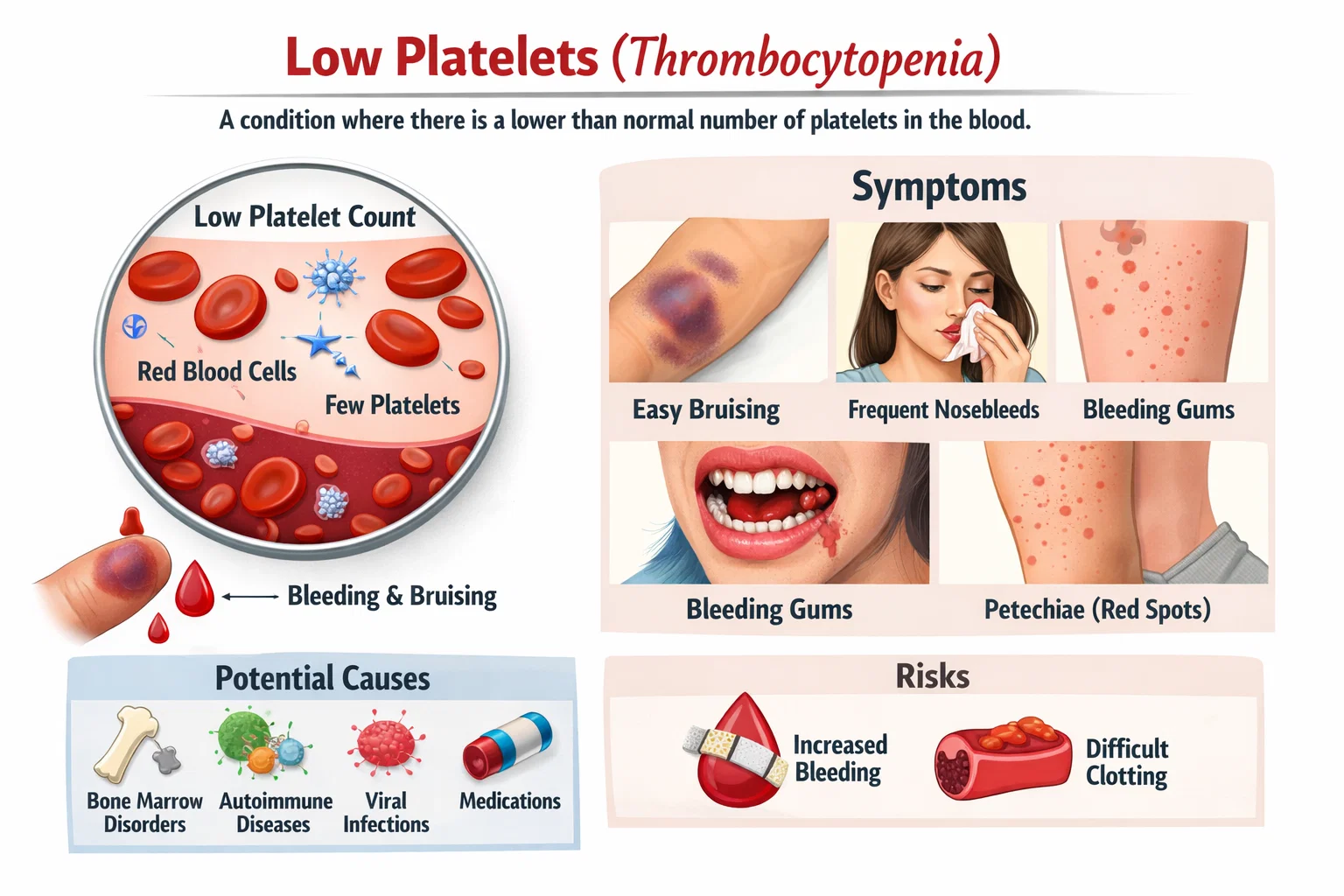
Thrombocytopenia means platelet levels fall below 150,000/µL.
Severity Classification
| Level | Platelet Count | Clinical Meaning |
|---|---|---|
| Mild | 100,000–150,000 | Often no symptoms |
| Moderate | 50,000–100,000 | Easy bruising possible |
| Severe | <50,000 | Increased bleeding risk |
| Critical | <20,000 | Risk of spontaneous bleeding |
3) Common Causes (Clinical Framework)
Low platelets usually result from one of three mechanisms:
A) Decreased Production (Bone Marrow Problem)
- Viral infections
- Chemotherapy
- Vitamin B12 or folate deficiency
- Bone marrow disorders
B) Increased Destruction
- Autoimmune conditions (e.g., Immune Thrombocytopenic Purpura – ITP)
- Certain medications
- Severe infections
- Lupus
C) Sequestration (Trapped in Spleen)
- Enlarged spleen
- Liver disease
4) Symptoms to Watch For
- Easy bruising
- Tiny red/purple spots on skin (petechiae)
- Nosebleeds
- Bleeding gums
- Heavy menstrual bleeding
- Blood in urine or stool (urgent evaluation required)
Severe thrombocytopenia can lead to internal bleeding.
5) Diagnosis
Doctors typically order:
- Complete Blood Count (CBC)
- Peripheral blood smear
- Liver function tests
- Viral testing (if indicated)
- Bone marrow exam (in selected cases)
Diagnosis focuses on identifying the underlying cause.
6) Treatment Strategy (Cause-Driven)
Treatment depends entirely on severity and cause.
Mild Cases
- Observation only
- Monitor counts periodically
Immune-Related Causes
- Corticosteroids
- IV immunoglobulin (IVIG)
- Immunosuppressants
Severe Bleeding
- Platelet transfusion
- Hospital management
Nutritional Deficiency
- Vitamin replacement
7) Lifestyle & Risk Management
If platelet count is low:
- Avoid contact sports
- Avoid NSAIDs (e.g., ibuprofen) unless approved
- Use soft toothbrush
- Limit alcohol
- Inform doctors before procedures
8) When It’s an Emergency
Seek immediate care if:
- Severe headache
- Confusion
- Heavy bleeding
- Vomiting blood
- Black stools
These may indicate internal bleeding.
📌 Professional Summary
Low platelets (thrombocytopenia) is not a disease itself but a clinical sign. The key question is why the platelet count is low and how low it is. Management ranges from simple monitoring to urgent intervention depending on severity and cause.
If you’d like, I can also explain:
- Platelet count in dengue or viral infections
- Platelet disorders in children
- Natural support strategies (with evidence-based limits)
- Or how to interpret a CBC report professionally