Empowering Breastfeeding Advice: How to Increase Milk Supply Naturally
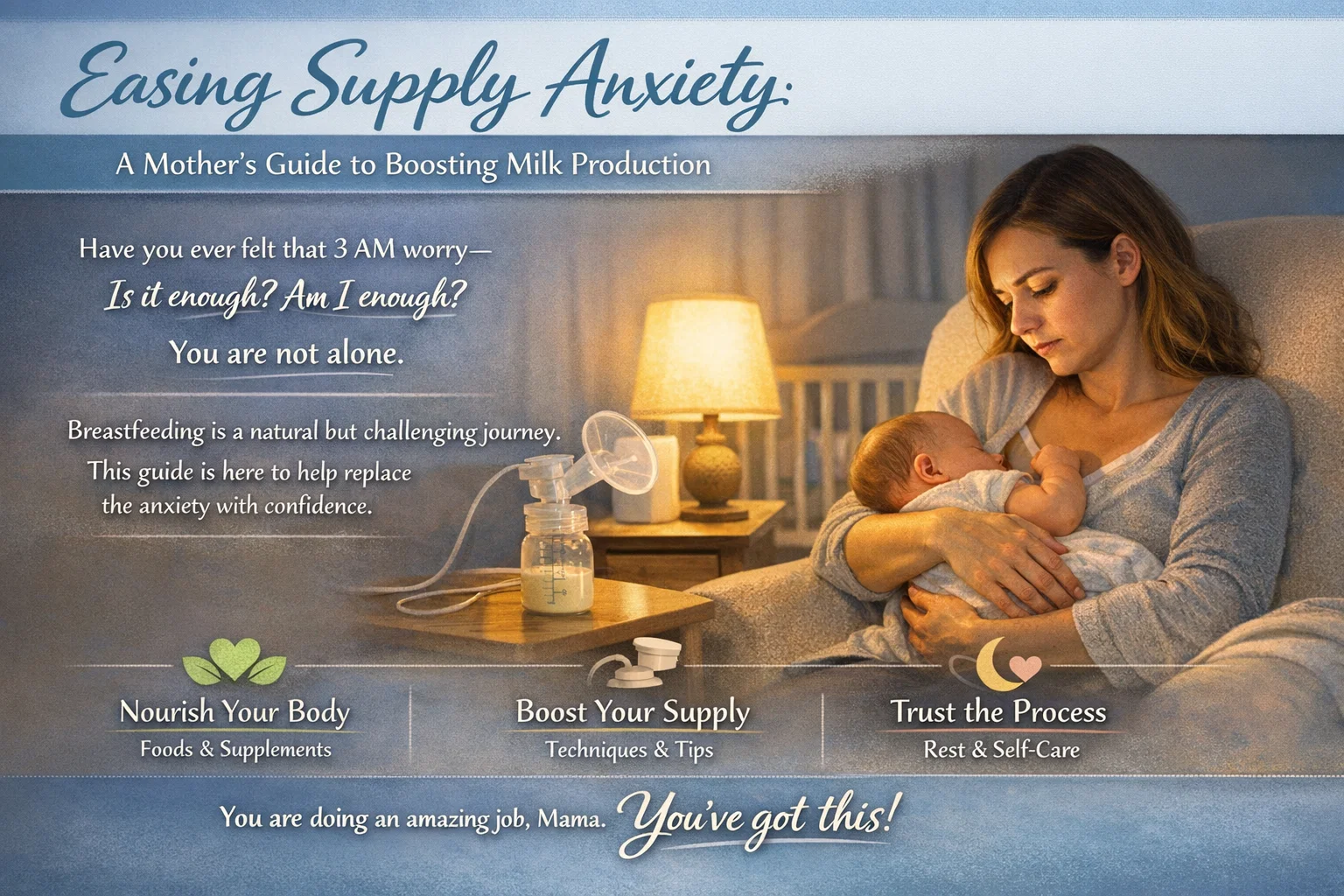
You’re sitting in the quiet of the nursery, the only sound the soft, rhythmic breathing of your sleeping baby. Instead of the peace you expected, you feel a sharp pang of worry. You glance at the half-empty pump bottle on the nightstand or recall the way your baby pulled away crying during the last feeding, and a heavy thought hits you: Is it enough? Am I enough? If you’ve felt that tightening in your chest—the “supply anxiety” that keeps so many mothers awake at 3:00 AM—please know you aren’t alone. Breastfeeding is one of the most natural things in the world, yet it is also a complex, learned skill that can be incredibly taxing on your physical and emotional reserves. It’s easy to feel like your body is failing a “test,” but the reality is that milk production is a biological process that can be nurtured. This guide is designed to replace that worry with actionable confidence, offering evidence-based, natural ways to support both your body and your baby.
I. The Biology of Milk Production: Supply and Demand
To increase your milk supply, you first have to understand the “factory” settings of your body. Your breasts do not function like a storage tank that fills up once and then empties; rather, they function like a continuous production line.
The Prolactin Loop
Every time your baby latches or you use a pump, your body releases a hormone called prolactin. This is the “make milk” signal. The more frequently milk is removed, the more prolactin stays in your system, telling your mammary glands to keep the assembly line moving.
Skin-to-Skin Contact: The Power of Oxytocin
Don’t underestimate the power of simply holding your baby. When you engage in “Kangaroo Care”—placing your diaper-clad baby directly against your bare chest—your body releases oxytocin. This is often called the “love hormone” or the “let-down hormone.”
Oxytocin causes the tiny muscles around the milk-producing cells to contract, squeezing the milk into the ducts where the baby can reach it. Research from the Academy of Breastfeeding Medicine shows that mothers who practice frequent skin-to-skin contact have higher milk volumes and breastfeed for longer durations.
Emptying the “Tank”
It sounds counterintuitive, but a “drained” breast actually produces milk faster than a full one. When the breast is soft and empty, the rate of milk synthesis is at its highest. If you wait for your breasts to “feel full” before nursing, you are actually sending a signal to your brain to turn down the volume.
II. Strategic Patterns to Boost Volume
How you feed is often more critical than what you eat. To signal to your body that it’s time to ramp up production, you need to mimic the behavior of a baby going through a growth spurt.
1. Power Pumping: The Workout for Your Breasts
Power pumping is a technique designed to mimic “cluster feeding.” It isn’t about the amount of milk you get in one session; it’s about the repeated stimulation of the nipple.
- The Schedule: * Pump for 20 minutes.
- Rest for 10 minutes.
- Pump for 10 minutes.
- Rest for 10 minutes.
- Pump for 10 minutes.
This hour-long “workout” should be done once a day for 3 to 5 consecutive days. You may not see an immediate increase in the bottle, but you are laying the hormonal groundwork for an increase in the days to follow.
2. On-Demand vs. Scheduled Feeding
In the early weeks, you might be tempted to put your baby on a strict 3-hour schedule. However, breastfeeding on a schedule is a common cause of low supply.
| Feature | On-Demand Feeding | Scheduled Feeding |
| Logic | Follows baby’s hunger cues. | Follows the clock. |
| Impact | Maximizes production. | Risk of “under-ordering” milk. |
| Night Feedings | High prolactin levels at night. | Discouraged, which can drop supply. |
III. Nutritional Powerhouses: Galactagogues and Hydration
While the mechanical removal of milk is the primary driver of supply, your diet provides the raw materials. Foods that are believed to increase milk supply are called galactagogues.
Essential Nutrients for Lactation
- Whole Grains (Oats and Barley): Oats are rich in iron and beta-glucan, a type of fiber that has been shown to raise prolactin levels.
- Healthy Fats: Incorporating avocados, flaxseeds, and salmon ensures your milk is calorie-dense and satisfying.
- Herbal Aids: Fenugreek and Blessed Thistle are traditionally used to stimulate blood flow to the mammary glands.
Hydration and Calories
Dehydration will absolutely tank your supply, but over-hydrating (forcing yourself to drink past the point of thirst) does not actually increase volume. Simply keep a water bottle nearby and drink whenever you nurse. Additionally, your body requires an extra 500 calories a day to sustain milk production—don’t skip meals!
IV. The Role of Stress and Maternal Self-Care
There is a biological reason why you find it harder to pump when you are stressed. Cortisol (the stress hormone) is the direct antagonist of oxytocin. If you are in “fight or flight” mode, your body can physically block the let-down reflex.
- The “Breastfeeding Station”: Create a sanctuary. Have a comfortable chair, a dim light, and a favorite show or book ready.
- Box Breathing: Before you latch the baby, take four deep breaths in, hold for four, and exhale for four. This resets your nervous system.
- Rest: A tired body struggles to produce milk as efficiently as a rested one. Prioritize naps over household chores.
V. Limitations: When to Seek Professional Help
Natural remedies have their limits. If you have tried these techniques for a week with no result, there may be an underlying medical issue or a physical barrier with the baby.
When “Natural” Isn’t Enough
- Medical Conditions: PCOS, thyroid disorders, or Insufficient Glandular Tissue (IGT) can interfere with production.
- Physical Barriers: If your baby has a tongue-tie or a shallow latch, they cannot effectively drain the breast, leading to a drop in supply.
- Professional Consultation: Working with an IBCLC (International Board Certified Lactation Consultant) is the best way to diagnose transfer issues through a “weighted feed.”
VI. FAQs: Your Breastfeeding Questions Answered
Does drinking beer increase milk supply?
This is an old wives’ tale with a tiny bit of truth. Barley can boost prolactin, but alcohol is a diuretic and inhibits the let-down reflex. Stick to non-alcoholic malt beverages or barley soup instead.
How long does it take to see an increase in breastfeeding output?
Patience is key. Your body is not a light switch. Generally, if you increase frequency today, you will see a noticeable shift in volume within 48 to 72 hours.
Will my supply drop when I go back to work?
It can, due to the stress of the transition. However, by maintaining a strict pumping schedule and practicing “reverse cycling” (nursing more at night), many mothers maintain their supply long-term.
Conclusion: Trusting the Process
Increasing your milk supply naturally is rarely about finding a single “magic pill.” Instead, it is a symphony of biological cues: frequent milk removal, skin-to-skin connection, and proper nutrition.
Your worth as a mother is never measured in ounces. Whether you provide an ounce or a gallon, the bond you are building is what matters most. By implementing these changes and listening to your body, you are taking the most empowering steps possible for your breastfeeding journey.